




Detective Skills for Kids: What Makes a Great Young Investigator?
When adults think about detectives, they often imagine Sherlock Holmes studying clues through a magnifying glass. Children usually imagine something different: secret messages, hidden suspects, mysterious objects, and the excitement of discovering something nobody else noticed.
The truth is that successful young detectives rarely have one special talent. Instead, they combine several skills that help them solve problems, communicate with others, and think creatively.
The good news? Most children already use these skills every day without realizing it.
Here are seven detective skills that often appear during mystery games and clue-solving activities.
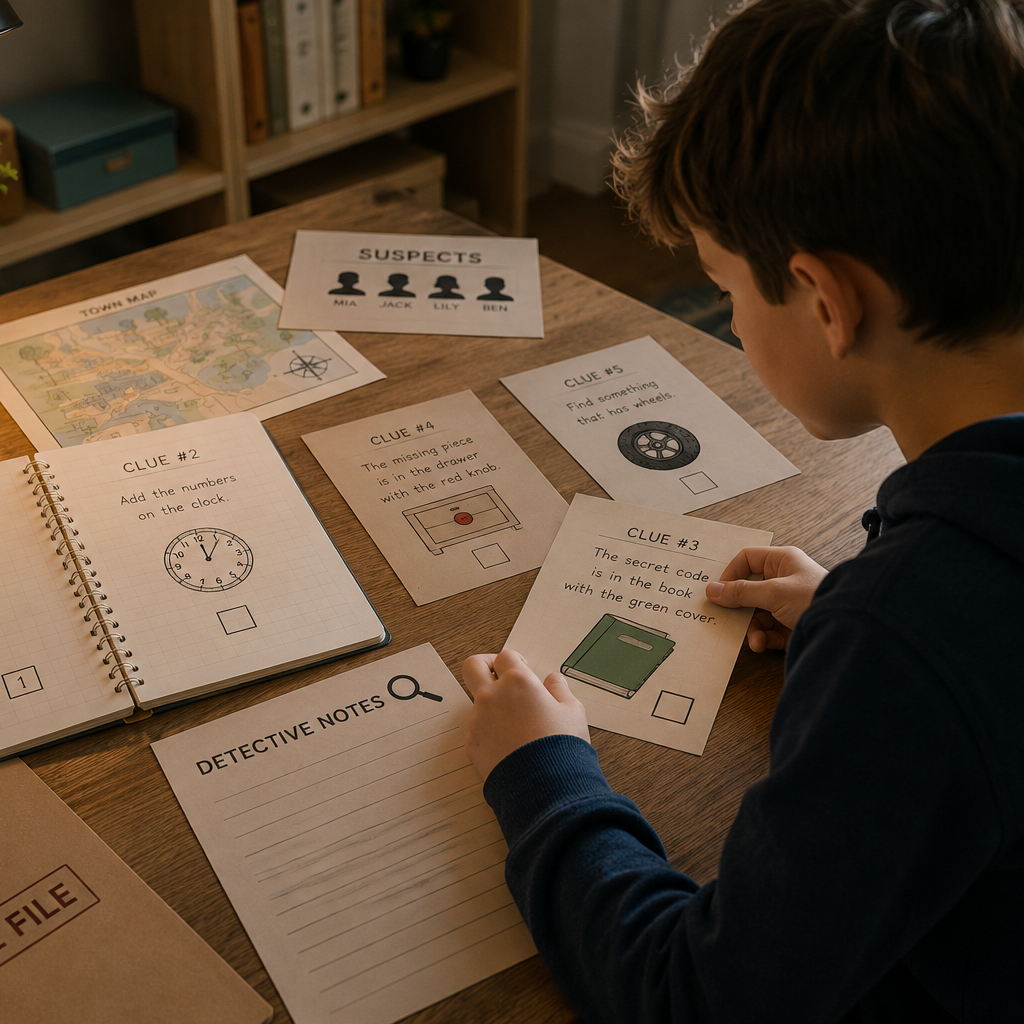
1. Observation: Noticing What Others Miss
The best detectives pay attention to details.
A child might notice that two witness statements don’t match, that a clue appears twice, or that a character is behaving differently than everyone else.
Observation is not about intelligence. It’s about slowing down long enough to notice small details.
Parents can encourage observation by asking questions such as:
- What stands out to you?
- Did you notice anything unusual?
- Which clue seems most important?
Mystery games naturally reward observation because players who pay attention often uncover information that helps the entire group.
2. Asking Good Questions
Many children assume solving a mystery means finding answers.
In reality, detectives spend much of their time asking questions.
Questions such as:
- Why would someone do that?
- What happened before this clue appeared?
- Who benefits from this situation?
- Is there another explanation?
Learning to ask questions helps children become stronger critical thinkers.
Often the child who asks the most interesting questions contributes more to solving the mystery than the child who talks the most.

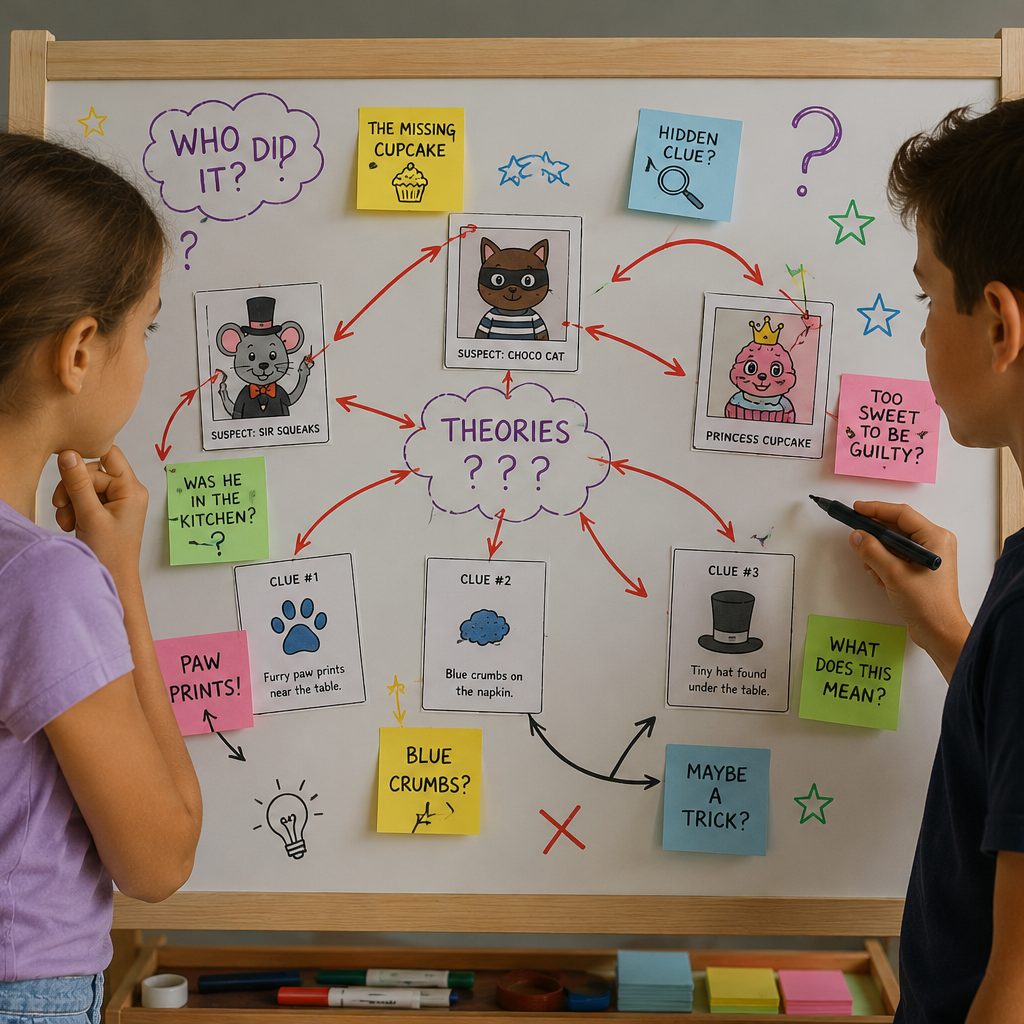
3. Looking for Patterns
Detectives look for connections.
Children naturally begin searching for patterns when they play mystery games:
- Several clues point to the same person.
- Similar events happen repeatedly.
- Different pieces of information fit together like a puzzle.
Pattern recognition is one of the most valuable problem-solving skills children can develop because it applies far beyond mystery games.
The same skill helps with reading comprehension, mathematics, science, and everyday decision-making.
4. Working as a Team
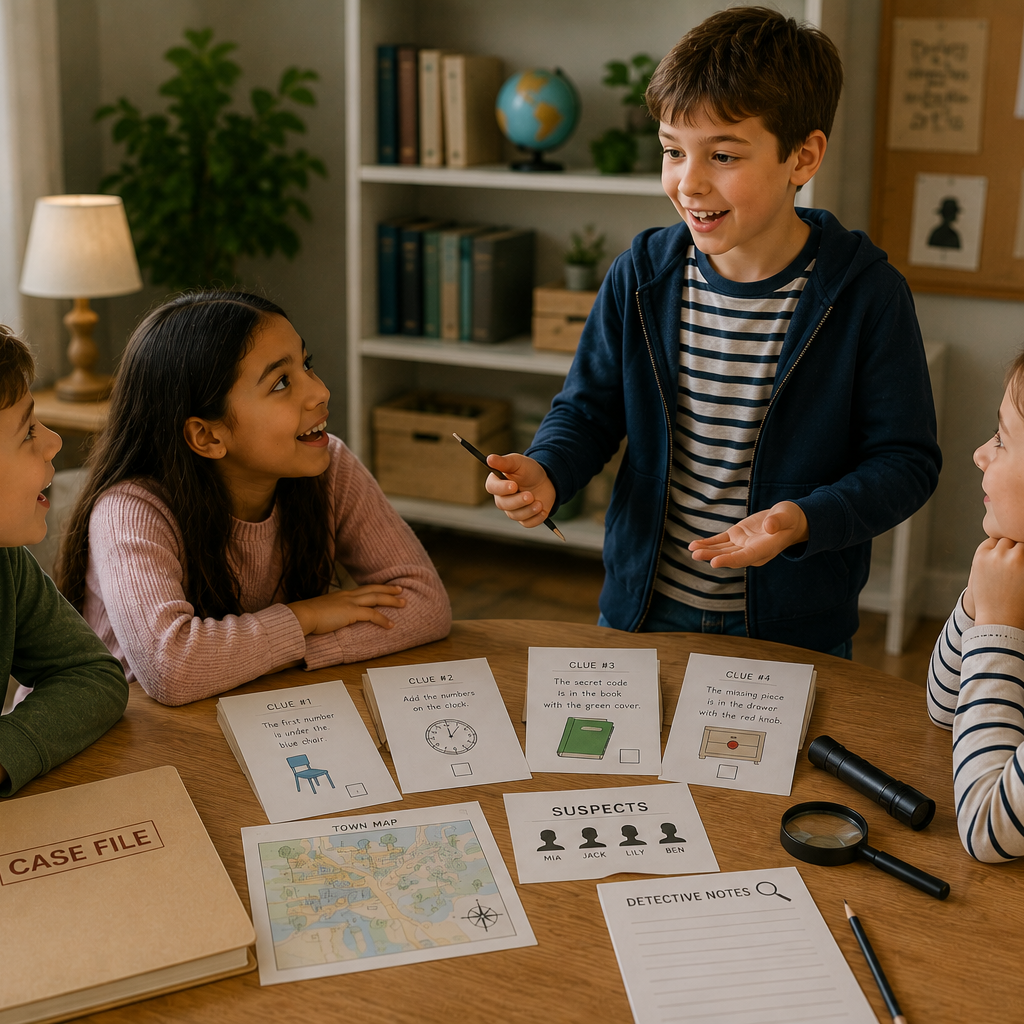
Many mysteries cannot be solved alone.
One player may remember an important detail while another notices a contradiction. A third player may understand a suspect’s motive.
Successful groups share information and build on each other’s ideas.
This collaborative problem-solving is one reason mystery games work so well for birthday parties, classrooms, and family gatherings.
Every participant has an opportunity to contribute.
5. Listening Carefully
Children sometimes focus so much on clues that they forget to listen.
Yet many mysteries are solved because someone remembers something another player said earlier.
Listening helps children:
- understand instructions
- remember evidence
- connect information from different sources
- cooperate more effectively
Good detectives are often excellent listeners.

6. Thinking Creatively
Not every mystery has an obvious solution.
Children frequently surprise adults by suggesting explanations nobody else considered.
Creative thinking helps players:
- consider alternative possibilities
- test different theories
- imagine motives
- connect clues in unexpected ways
Some of the most memorable mystery moments happen when a child proposes an idea that initially sounds impossible but later proves correct.

7. Staying Curious
If there is one skill that appears in almost every successful detective, it is curiosity.
Curious children naturally want to know:
- what happened
- why it happened
- who was involved
- what clue they have not discovered yet
Curiosity keeps players engaged and motivates them to keep investigating even when the solution is not immediately obvious.
Fortunately, curiosity is something mystery games encourage from beginning to end.
Can Detective Skills Be Learned?
Absolutely.
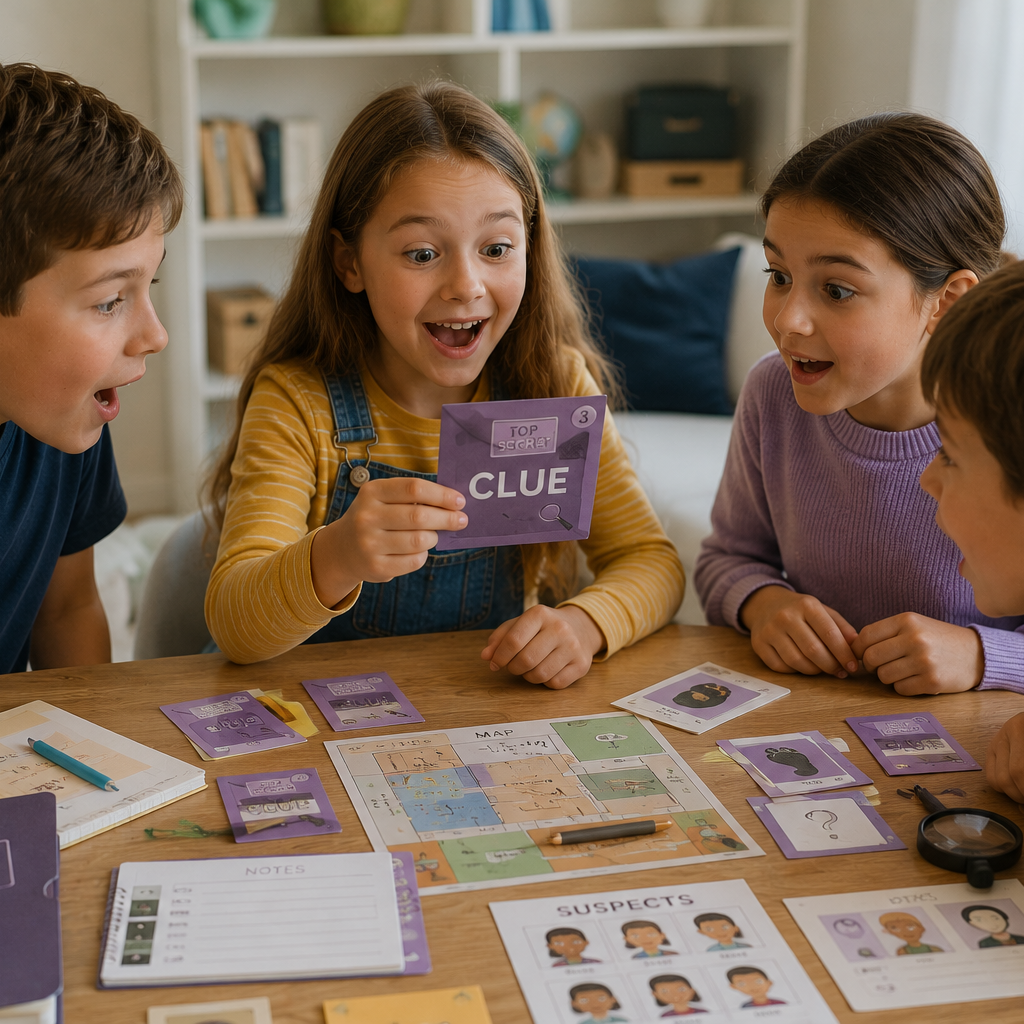
Children do not need to be expert readers, puzzle champions, or straight-A students to enjoy mystery games.
Many detective skills develop through practice. The more opportunities children have to investigate clues, discuss theories, and solve problems together, the more confident they become.
The goal is not to create perfect detectives.
The goal is to create experiences that encourage curiosity, teamwork, communication, and creative thinking.
Try a Mystery Game Together
Looking for a fun way to develop detective skills while keeping children engaged?
Our printable mystery games for kids and teens combine storytelling, clue-solving, teamwork, and interactive role-play for birthdays, classrooms, sleepovers, and family gatherings.
👉 Explore our guide to choosing the best mystery party games for kids and teens.